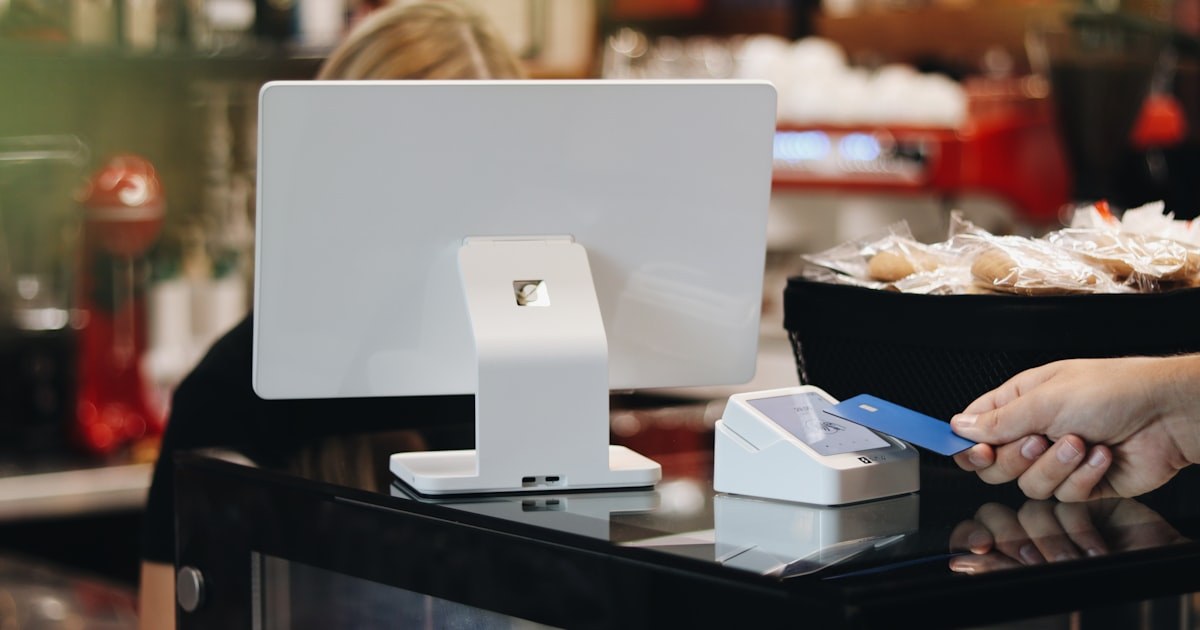
If a cashier adds a 3% fee because you paid with a credit card, that fee is legal in most of the country and flatly illegal in four places: Connecticut, Massachusetts, Maine, and Puerto Rico. Everywhere else the question is not whether a merchant may surcharge you, but whether they followed the rules while doing it. Most of the surcharges people complain about are legal in principle and non-compliant in practice.
Here is where the line actually falls in 2026, and how to tell when the fee on your receipt broke a rule.
Where credit card surcharges are banned outright
Four jurisdictions still enforce a straight prohibition. A merchant there cannot add a fee for paying with a credit card, no matter how clearly they disclose it.
- Connecticut
- Massachusetts
- Maine, under 9-A M.R.S. section 8-509, which bars a seller from imposing a surcharge on a cardholder who pays by card instead of cash or check
- Puerto Rico
Maine’s statute carries a wrinkle worth knowing if you pay a government bill: a governmental entity may surcharge, provided it tells you the fee can be avoided by paying another way. That is why your town office can charge you to pay a property tax bill by card while the hardware store down the street cannot.
The states where the ban was struck down but the statute survives
This is the part that trips up both readers and merchants. Several states passed surcharge bans, then lost them in federal court on First Amendment grounds, because the laws regulated how a price was described rather than what could be charged. The statutes were never repealed, so they still appear in the state code and still show up in outdated articles.
In Texas, Oklahoma, Kansas, and Florida, courts invalidated the bans and surcharging is permitted today. Kansas is the most recent of these, with surcharging settled as legal there as of January 1, 2025. If someone tells you a surcharge is illegal in Texas because “it says so in the statute,” they are reading a provision a federal court has already set aside.
Oklahoma went further than a court simply setting the old ban aside. SB 677, effective November 1, 2025, formally repealed the invalidated statute and replaced it with an actual framework: surcharges there are capped at the lesser of 2% or the merchant’s real processing cost, with mandatory disclosure before the sale. That puts Oklahoma in the capped column below, not just a state coasting on an old ban’s defeat in court.
Florida layered a second, narrower rule on top of its own court-invalidated ban. SB 606, the state’s “Operations Charges” law, took effect July 1, 2026, and applies specifically to restaurants. Any food-service business that charges a credit card surcharge, gratuity, or service charge must disclose the amount or percentage on the menu, on any ordering website or app, and on the front of the receipt, in a font at least as large as the menu item text. The Florida Department of Business and Professional Regulation enforces it; there is no private right of action, so a diner cannot sue directly but can file a complaint with the DBPR.
California is its own category, and most coverage gets it wrong
California’s old surcharge ban was struck down like the others. Plenty of merchant-facing sites stop there and conclude surcharging is fine in California. Others swing the opposite way and declare surcharges illegal again as of July 1, 2024. Neither is right.
What changed is SB 478, the Honest Pricing Law. It is a price-display rule, not a surcharge ban. The California Attorney General’s own FAQ is blunt about what it requires: the advertised price must be the full price the customer pays. The FAQ addresses the surcharge structure directly. Asked whether a business can comply by listing one price and separately stating that an additional percentage fee will apply, the answer given is no. Asked about restaurants specifically, the guidance states that a restaurant cannot charge an additional surcharge on top of the price listed.
The practical effect for you as a cardholder: in California, a posted price plus a separate card fee at checkout is the exact pattern the law targets. The fee is not banned as a fee. Advertising a price that does not include it is the violation. A California business that wants to recover card costs has to build them into the listed price, or run dual pricing, because the same FAQ confirms that charging less than the advertised price is always allowed.
Virginia requires the surcharge to already be in the sticker price
Virginia SB 1212, effective July 1, 2025 and codified at Va. Code Section 59.1-608, takes the same total-price approach as California but writes it more bluntly: no merchant may advertise or display a price without including all mandatory fees or surcharges in that total. A sign next to a lower posted price stating that a surcharge applies no longer satisfies the law; the number on the shelf, menu, or checkout page has to already be the number you pay. This is a disclosure-format requirement stacked on top of the card network caps covered above, not a new limit on the surcharge itself. A first violation carries a civil penalty of up to $2,500, and $5,000 for each one after that.
States that allow surcharging but cap it
| State | Limit on a credit card surcharge |
|---|---|
| Colorado | 2% of the transaction, or the merchant’s actual processing cost, whichever is lower |
| Oklahoma | 2% of the transaction, or the merchant’s actual processing cost, whichever is lower (SB 677, effective 2025-11-01) |
| Montana | 3% |
| Minnesota | 5% under state law, though card network caps bind well below this |
| New York, New Jersey, Nevada, South Dakota, Nebraska, Georgia | No fixed percentage. Capped at the merchant’s actual cost to accept the card |
| Connecticut, Massachusetts, Maine, Puerto Rico | Prohibited entirely |
| Remaining states and DC | Permitted, subject to card network rules below |
Colorado’s 2% cap is the tightest real number in the country and comes from SB21-091. If you are surcharged 3% in Denver, that is over the state limit regardless of what the merchant’s processor told them.
Pennsylvania sits in that “remaining states” row today, but it nearly didn’t: HB1780, the “Transparent Payment Fees Act,” would have given Pennsylvania its own dedicated disclosure-and-cap statute for the first time. It was tabled in committee on September 8, 2026. Until something replaces it, Pennsylvania merchants answer only to the network rules below and the state’s general Unfair Trade Practices and Consumer Protection Law, not a surcharge-specific statute.
Whether the surcharge fee itself gets taxed is a separate question
A surcharge being legal does not settle whether sales tax applies to the surcharge amount itself, and states are only starting to answer that in statute. Alabama’s SB 221, effective September 1, 2026, excludes a credit card transaction fee from the state’s sales and use tax base, as long as the fee is a separate, identifiable line item from the price of the purchase. Charge $100 for the item and $3 as a clearly separated card fee, and Alabama taxes only the $100. Fold the fee into a single $103 total on the receipt, and the whole amount is taxable. Before SB 221, this was only a Department of Revenue policy position, not a statute, so Alabama is the first state to put the itemization requirement into law rather than agency guidance.
The rules that apply in every state, and the myth about a federal cap
A claim circulates constantly in merchant-processing content that federal law caps surcharges at 4%. There is no such federal statute. The caps are card network rules, which merchants agree to contractually, and they are stricter than most people assume:
- Visa caps surcharges at 3%, reduced from 4% effective April 15, 2023.
- Mastercard caps surcharges at 4%.
- The surcharge may never exceed the merchant’s actual cost of accepting the card, so the applicable ceiling is the lower of the cap or their true cost.
- Signage is required at the store entrance and again at the point of sale, and online at the point of checkout.
- The surcharge must appear as a separate line item on your receipt, not folded silently into the price.
- The merchant must notify their acquiring bank in advance before surcharging at all.
These are the rules most often broken. A surcharge with no signage, or one that never appears as its own line on the receipt, is a network rule violation even in a state with no surcharge law at all.
Debit cards are never surchargeable
This one is absolute and it is the single most useful thing to know at a register. Surcharging debit card transactions is prohibited in all 50 states, and that holds even when you run a debit card as “credit” at the terminal. If a merchant applies a card fee to a debit transaction, they are wrong everywhere, with no state-by-state analysis required.
It also means the cheapest response to a surcharge is often the simplest. Paying by debit or cash sidesteps the fee entirely wherever a surcharge is in play.
Louisiana put its own state law behind this rule on August 1, 2026, when Act 751 (formerly Senate Bill 254) took effect. It bans retail businesses from surcharging debit transactions specifically, while leaving credit card surcharges untouched, and gives cardholders a real enforcement path: a business gets 30 days to cure the violation and refund you after written notice, or you can bring a civil claim. It is a narrower law than the blanket network-rule prohibition already covered above, but it shows states are starting to write the debit protection into their own statutes rather than leaving it to Visa and Mastercard’s rulebooks.
Surcharge versus cash discount, and why the difference is not semantics
A surcharge starts from the posted price and adds a fee for paying by card. A cash discount, sometimes run as dual pricing, starts from a higher posted price and takes money off for paying cash or debit. The dollars can land identically. The legal treatment does not.
Cash discounting is legal in all 50 states, protected by the Durbin Amendment, and it remains legal in the four jurisdictions that ban surcharges outright. Maine’s statute says so explicitly: a discount from the regular price is not a surcharge.
So a Massachusetts gas station posting one price for cash and a higher one for credit is not evading the ban. It is using the structure the ban leaves open. The thing to check is which number is the posted price, because that determines whether you are looking at a legal discount or an illegal surcharge.
What to do when you get surcharged
- Check the state first. In Connecticut, Massachusetts, Maine, or Puerto Rico, a credit card surcharge is not permitted at all, and a private merchant charging one is breaking state law.
- Check whether it was disclosed. Network rules require signage at entry and at the register. No sign means a violation you can raise.
- Check the receipt. The surcharge must be its own line item. Buried fees are non-compliant.
- Check the card type. Any surcharge on a debit transaction is improper, full stop.
- Check the amount. Over 3% on a Visa card, or over your state’s cap, exceeds what the merchant agreed to.
- Escalate to the network, not just the merchant. Visa and Mastercard both accept cardholder reports of improper surcharging, and a merchant’s acquirer can fine them for it. That is usually more effective than arguing at the counter.
Bottom Line
Credit card surcharges are legal in most of the country, banned outright in Connecticut, Massachusetts, Maine, and Puerto Rico, and capped at 2% in Colorado. The rules broken most often are not state laws but network rules on signage, receipt disclosure, the 3% Visa ceiling, and the flat prohibition on surcharging debit. Check the sign, the receipt line, and the card type before you accept the fee.
Frequently Asked Questions
Q: Can a merchant charge me extra for using a credit card?
A: In 46 states and DC, yes, within card network caps of 3% for Visa and 4% for Mastercard, and never above their actual cost of acceptance. In Connecticut, Massachusetts, Maine, and Puerto Rico, no.
Q: Is a credit card surcharge legal in California?
A: The old California ban was struck down, so the fee itself is not prohibited. Under SB 478, though, the advertised price must include all mandatory charges, and the Attorney General’s guidance states that listing a price and adding a separate percentage fee does not comply. Businesses there are expected to build the cost into the posted price or use dual pricing.
Q: Can I be surcharged on a debit card?
A: No. Debit surcharging is prohibited in all 50 states, including when a debit card is processed as credit.
Q: What is the maximum surcharge a merchant can charge?
A: 3% on Visa and 4% on Mastercard, and never more than what the merchant actually pays to accept the card. Some states are stricter, with Colorado capping surcharges at 2%.
Q: Is a cash discount the same as a surcharge?
A: Legally, no. A cash discount reduces a posted price for paying cash and is legal in all 50 states. A surcharge increases a posted price for paying by card and is banned in four jurisdictions. Check which figure the merchant posts as the regular price.
Surcharge law is actively litigated and several state bans have been struck down while remaining in the state code. Details in this article were verified against primary sources on August 9, 2026, refreshed September 3, 2026 (added Louisiana’s Act 751 debit-surcharge ban), refreshed again September 5, 2026 (added Alabama SB 221’s sales-tax exclusion for itemized credit card fees), and refreshed again September 11, 2026 (added Oklahoma SB 677’s statutory cap and disclosure rules, Florida SB 606’s restaurant-specific disclosure requirement, and Virginia SB 1212’s total-price-inclusion rule), including the Maine Revised Statutes, the California Attorney General’s SB 478 guidance, Louisiana Act 751 (SB 254), the Alabama Department of Revenue’s SB 221 guidance, the Oklahoma enrolled bill text for SB 677, the Florida SB 606 bill text, and the Code of Virginia Section 59.1-608. Confirm your state’s current rules before relying on them in a dispute.