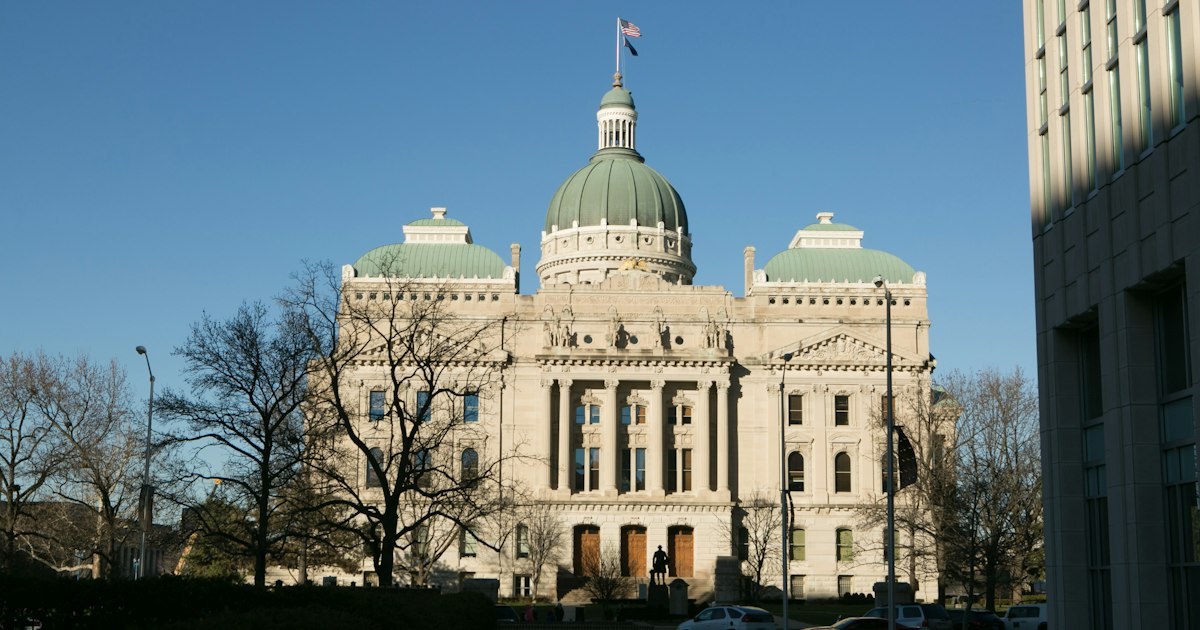
Indiana has no statute that bans, caps, or specifically regulates a private merchant’s credit card surcharge, so surcharging there runs entirely on the Visa and Mastercard network rulebook, the same as most states in this series. But Indiana is the first state here with something genuinely different on the books: a statute that does not just permit a government body to add a card fee, it explicitly overrides private contract law to let one do it, citing the state’s general consumer-credit code as the legal basis.
The Alcohol and Tobacco Commission Can Override Your Card Agreement
Indiana Code 7.1-3-1-13.5, in the Alcohol and Tobacco title’s permit-payment section, lets the Alcohol and Tobacco Commission pay or collect a bank card or credit card service charge in connection with a permit payment. The unusual part is the next clause: the statute says these fees apply “regardless of retail merchant agreements between the bank and credit card vendors that may prohibit such fees.” That is a state legislature writing into law that a specific agency’s card surcharge is allowed to stand even if the private processing agreement between a bank and a card network says otherwise. The statute grounds this in Indiana Code 24-4.5-3-202, the Uniform Consumer Credit Code’s “permitted additional charges” provision, which normally governs what a lender can add to a consumer loan, not a retail transaction.
No other state in this series has a statute that reaches past its own agency and into the private card-network agreement itself. Ohio’s treasurer, county, and township surcharge statutes authorize a fee and require signage, but none of them purport to override anyone’s contract. Indiana’s alcohol permit statute does, even though its practical reach is narrow: it applies to permit payments made to the Alcohol and Tobacco Commission, not to a bar or liquor store’s own point-of-sale surcharge on a bottle of wine.
Courts Get Their Own, Simpler Version
Indiana Code 33-37-6-3, in the Courts and Court Officers title, takes the more ordinary approach: a court clerk who collects a credit card service fee on a court payment forwards that fee to the county auditor or city/town fiscal officer, and the funds can be used without further appropriation to cover the bank’s transaction charge. It is a bookkeeping statute, not an override clause, functionally similar to what Ohio and dozens of other states have written for their own courts and agencies.
Indiana’s general consumer protection law, the Deceptive Consumer Sales Act, has no provision naming card surcharges at all. There is no Indiana statute anywhere that caps a private merchant’s surcharge percentage or requires a specific disclosure beyond what Visa and Mastercard’s own rules already demand.
Where This Leaves Indiana Next to Ohio
Ohio and Indiana both land on “no law for private merchants,” but they get there through different legal architecture. Ohio wrote three separate, parallel statutes for three levels of government, each with its own notice requirement, and stopped there. Indiana wrote one statute for its alcohol commission that goes further than authorization, an explicit override of private contract terms, backed by a citation to the state’s general consumer-credit code, and a second, ordinary bookkeeping statute for courts. A reader who wants to know why a specific agency’s card fee is bulletproof against a processing agreement finds an actual answer in Indiana law. A reader asking the same question about a private restaurant or auto shop gets nothing from the state either way, the same answer as Ohio, Pennsylvania, North Carolina, and most of this series.
What to Actually Check on an Indiana Receipt
- At a private business: No Indiana-specific cap or disclosure rule exists. The only ceilings are the card network rules: 3% on Visa, 4% on Mastercard, and never more than the merchant’s actual cost of acceptance.
- Paying an alcohol permit fee to the state: A card service charge is explicitly authorized by IC 7.1-3-1-13.5 and cannot be challenged on the basis that a bank-network agreement supposedly prohibits it.
- Paying a court fee or fine by card: A credit card service fee is standard and statutorily routed to cover the bank’s transaction charge under IC 33-37-6-3.
- On a debit card: Never surchargeable, in Indiana or anywhere else, under the federal Durbin Amendment.
Where to Report a Problem
A private-merchant surcharge with no signage, or one not broken out as its own line item, is a card network rule violation reportable to Visa or Mastercard directly. A complaint about deceptive pricing more broadly falls under the Indiana Attorney General’s Consumer Protection Division. A dispute over an alcohol permit fee or a court’s credit card service fee is a matter for the issuing agency or court clerk, not a private-merchant complaint channel.
The Card Math: Why a Flat-Rate Card Offsets the Hit

Since Indiana gives a private-merchant surcharge no state-law ceiling beyond the card network’s own 3%/4% cap, the card in your wallet is the only lever you control at a private checkout. The Citi Double Cash Card earns a flat 2% on every purchase, 1% when you buy and 1% when you pay it off, with no annual fee and no categories to track. That claws back roughly two-thirds of a 3% Visa surcharge and half of a 4% Mastercard surcharge on any purchase, without needing the transaction to fall into a bonus category first.
Bottom Line
Indiana has no general law limiting what a private merchant can add to your bill for paying with a card, so surcharging there runs on Visa and Mastercard’s network rules alone: 3%/4% caps, signage, and an itemized receipt line. What Indiana does have, uniquely in this series, is a statute letting its Alcohol and Tobacco Commission collect a card fee even over a bank agreement that would otherwise prohibit it, and a separate, ordinary court-fee statute. Neither reaches a private business.
FAQ
Q: Is it legal for a store to charge a credit card fee in Indiana?
A: Yes. Indiana has no state law banning or capping merchant surcharges at a private business. It’s legal as long as the merchant follows Visa or Mastercard’s disclosure and cap rules.
Q: Does Indiana have any statute about credit card fees at all?
A: Yes, but not for private merchants. IC 7.1-3-1-13.5 lets the Alcohol and Tobacco Commission charge a card fee on permit payments, overriding any bank agreement that would otherwise prohibit it. IC 33-37-6-3 lets court clerks collect and route a credit card service fee on court payments.
Q: What does “override a retail merchant agreement” actually mean?
A: Card processing agreements between banks and merchants sometimes restrict when a fee can be added. Indiana’s alcohol permit statute states its fee applies regardless of such an agreement; that override is written into the statute itself and only applies to that specific state payment, not to a private business’s own transactions.
Q: Is there a state-specific cap on the surcharge amount in Indiana?
A: No. Indiana sets no dollar or percentage limit of its own for private merchants. The only ceilings are the card network rules: 3% on Visa, 4% on Mastercard, and never more than the merchant’s actual cost of accepting the card.
Q: Can I be surcharged on a debit card in Indiana?
A: No. Visa and Mastercard’s network rules prohibit surcharging debit or prepaid transactions everywhere, Indiana included, and the federal Durbin Amendment backs that up nationwide.
For how the other 50 states handle this, see our state-by-state credit card surcharge law breakdown.